Ever wondered where to find that intense nuke alarm sound for your Roblox game? This comprehensive guide dives deep into the world of Roblox sound IDs, specifically focusing on the popular nuke alarm. We'll explore why players and developers seek out this particular audio asset, how to locate its unique ID within the vast Roblox audio library, and the best practices for implementing it into your creations. Discover trending ways gamers are using this sound to elevate their gameplay, from dramatic countdowns in simulation games to epic battle finales in combat arenas. Understanding the nuances of Roblox audio IDs is crucial for any aspiring game creator looking to build immersive and engaging experiences that truly stand out in the crowded platform. Learn the ins and outs of audio integration, ensuring your sound effects hit just right every time.
Hey there, curious friend! So, you're wondering about the 'nuke alarm Roblox ID,' right? Basically, it's a specific numerical code that lets you add that really intense, dramatic nuclear alarm sound into any game you're building or playing in Roblox. It's super popular with creators who want to inject some serious tension or an epic countdown into their experiences, making everything feel much more urgent and exciting. Think of it as a special key to unlock a specific sound effect from Roblox's huge audio library.
People use these sound IDs to make their games more immersive, whether it's for a catastrophic event in a city simulator, a frantic escape challenge, or just to create a sense of impending doom. It's all about making the player *feel* something, and a well-placed nuke alarm can certainly do that! It adds a layer of depth that visuals alone can't always achieve. Plus, knowing how to find and use these IDs is a fundamental skill for anyone looking to seriously customize their Roblox creations.
The cool thing is, once you grab that ID, you can implement it with a bit of scripting to play whenever you want – maybe when a timer hits zero, a button is pressed, or a specific in-game event triggers. It's a small detail that can have a massive impact on how engaging your game becomes, turning a simple moment into a memorable, heart-pounding experience. So, let's dive into some common questions about this powerful little sound effect!
Most Asked Questions about Nuke Alarm Roblox ID
What is the Nuke Alarm Roblox ID and how do I use it?
The Nuke Alarm Roblox ID is a unique numerical identifier for a specific sound file in Roblox's audio library. You use it by finding the ID (a string of numbers) on the Roblox Creator Hub, then inputting it into a 'Sound' object in Roblox Studio with the prefix 'rbxassetid://' (e.g., rbxassetid://1234567890). A simple script then plays this sound in your game, creating dramatic alerts for players.
Where can I find reliable Nuke Alarm sound IDs for my Roblox game?
You can find reliable Nuke Alarm sound IDs directly within the Roblox Creator Hub's 'Audio' section. Search for terms like 'nuke alarm,' 'nuclear warning,' or 'air raid siren.' Always preview the sound to ensure quality and suitability. Many community-contributed sounds are available, but verify them to ensure they meet your game's thematic and auditory needs.
Why would I want a Nuke Alarm sound in my Roblox game?
A Nuke Alarm sound adds significant dramatic tension and immersion to Roblox games. It's perfect for signaling critical in-game events, countdowns, impending disasters, or creating a suspenseful atmosphere. This sound can heighten player engagement, making moments feel more impactful and memorable, driving urgency in gameplay scenarios like evacuations or boss battles.
How do I make the Nuke Alarm play at a specific time or event in Roblox Studio?
To make the Nuke Alarm play at a specific time or event, you'll need to use scripting in Roblox Studio. After inserting a 'Sound' object with the alarm ID, write a Lua script to call `soundObject:Play()` when your desired trigger occurs, such as a button click, a timer reaching zero, or a player entering a specific area. This allows for precise control over sound cues.
Are there alternatives if a Nuke Alarm ID gets removed or doesn't work?
Yes, if a Nuke Alarm ID is removed or doesn't work, you have alternatives. You can search the Roblox audio library for similar 'siren' or 'warning' sounds. Many creators also upload their own royalty-free audio. Alternatively, you can create and upload your own custom alarm sound using external audio editing software, ensuring you have full control and longevity over the asset.
What are common issues when trying to implement a Nuke Alarm ID in Roblox Studio?
Common issues include incorrect ID format (missing 'rbxassetid://' prefix), typos in the ID number, or the 'Sound' object being muted or disabled. Scripting errors, such as incorrect references to the sound object or faulty trigger logic, also frequently prevent playback. Always check the output window in Roblox Studio for error messages to diagnose problems quickly.
Can I control the volume and looping of the Nuke Alarm sound in Roblox?
Absolutely! The 'Sound' object in Roblox Studio has properties like 'Volume' and 'Looped' that you can easily adjust. Set 'Volume' (0-10) to control loudness and 'Looped' to true if you want the alarm to repeat continuously. These properties can also be modified dynamically through scripting, allowing you to fade the alarm in or out for enhanced dramatic effect.
Beginner Questions
What are the basic steps to add any sound, including a nuke alarm, to my Roblox game?
Adding a sound starts in Roblox Studio. First, open your game and in the 'Explorer' window, right-click where you want the sound (e.g., 'Workspace'), select 'Insert Object,' then 'Sound.' Next, in the 'Properties' window for your new 'Sound' object, find 'SoundId' and paste your copied ID (like rbxassetid://1234567890). Finally, use a simple script to tell the sound when to play (e.g., `game.Workspace.Sound.Playing = true`). This is your foundational skill for all audio!
How do I preview a Nuke Alarm sound before adding it to my game?
Previewing a sound is essential to ensure it fits your game's mood. Head to the Roblox Creator Hub, navigate to the 'Audio' section under 'Creations.' Search for 'nuke alarm.' Each search result will usually have a play button or a small audio icon next to it. Click on this to listen to the sound directly through your browser. This lets you confirm the sound's quality and style without even opening Roblox Studio. It’s a great way to save time and find the perfect match.
Tips & Tricks
What's a clever trick for making the Nuke Alarm sound more impactful?
For more impact, try layering. Don't just play the alarm; add a low, ominous rumble or a distant, faint explosion sound *before* the main alarm blares. This builds anticipation and gives the alarm more weight. You can also experiment with gradually increasing the alarm's volume or playback speed as an event approaches, creating a heightened sense of urgency and dread. Small details like these make a huge difference in player perception and immersion.
How can I make my Nuke Alarm sound feel like it's coming from a specific location?
To make your Nuke Alarm sound feel localized, attach the 'Sound' object to a specific 'Part' in your game world (like a siren tower). Then, adjust the 'RollOffMinDistance' and 'RollOffMaxDistance' properties in the 'Sound' object's properties. 'RollOffMinDistance' is how close a player needs to be to hear it at full volume, and 'RollOffMaxDistance' is how far away it can be heard before fading out completely. This uses Roblox's spatial audio to create a realistic, directional sound effect that genuinely enhances your game's environment.
Still have questions?
Don't stop learning! Check out our guides on Roblox Scripting Basics or Advanced Roblox Audio Design for more in-depth knowledge!
Hey fellow gamers, ever found yourself in a tense Roblox scenario, desperately needing that iconic 'nuke alarm' sound to really ramp up the drama? It's a common query: 'What's the Roblox ID for a nuke alarm?' This isn't just about finding a code; it's about unlocking a level of immersion that makes your game unforgettable. From apocalyptic simulators to action-packed obbies, a well-placed, chilling siren can transform an ordinary moment into something truly epic. We're diving deep into the specifics of finding and using these sound IDs, making sure your creations resonate with players.
Understanding the Roblox Audio Library is a crucial first step for any developer or player looking to enhance their gaming experience. This library is where countless sound IDs are stored, enabling creators to incorporate diverse audio elements into their games. Why is it so important? Because it acts as the central hub for all community-uploaded and Roblox-approved sounds, making it a powerful resource for building dynamic auditory landscapes. Knowing how to navigate it means you're well-equipped to find not just the nuke alarm, but any sound your game might need, ensuring your projects always have that professional polish.
Sound ID codes themselves are unique numerical identifiers, essentially digital fingerprints, for every audio asset available on the platform. How do these sound ID codes work in Roblox? When you input one of these codes into your game development environment, Roblox fetches that specific audio file, allowing it to play in your experience. This system streamlines the process of adding custom sounds, giving developers immense flexibility. It's a fundamental aspect of Roblox game development, ensuring that sound effects are precisely matched to their intended in-game events, from character footsteps to colossal explosions. This precise integration helps creators craft truly immersive and engaging worlds.
Game development in Roblox is significantly enhanced by effectively utilizing these sound IDs for immersive experiences. How does this relate to game development in Roblox? By integrating specific sound effects like the dramatic nuke alarm, developers can signal critical in-game events, build tension, or simply add a layer of realism that captivates players. Sound is often an overlooked aspect, but it's vital for conveying information and setting the mood, making it a cornerstone for creating truly memorable and engaging game worlds. Mastering sound integration is a hallmark of successful Roblox developers, setting their games apart.
Copyright Roblox music and sound effects are also a vital consideration when you're adding audio to your game. Why is copyright important for Roblox music and sounds? It ensures that the original creators of the audio are credited and protected, preventing unauthorized use of their work. While Roblox provides a vast library of sounds, developers should always be mindful of the licensing terms associated with each asset. Using licensed or public domain sounds protects your game from potential legal issues, allowing you to focus on creative development. Always check the usage rights to ensure your game remains compliant and ethical.
Finally, the overall immersion in Roblox games is greatly amplified by thoughtful sound design. How does sound contribute to immersion in Roblox games? The right audio can transform a flat visual experience into a deeply engaging sensory journey, pulling players deeper into the virtual world. Imagine a game without sound; it loses much of its impact and ability to convey emotion or danger. A perfectly timed nuke alarm isn't just a sound; it's a narrative device, heightening anticipation and making players feel truly present in the unfolding drama, thus creating a more compelling and memorable gaming experience.
The planned structure for this article is highly scannable and user-friendly, ensuring you quickly find what you need. We use clear H2 and H3 headers to logically segment information, allowing for easy navigation. Short, digestible paragraphs, bold text for crucial terms, and bulleted lists break up dense text, making it easy to quickly grasp key points without getting lost. This design directly addresses the core 'Why' and 'How' search intents, guiding you through both conceptual explanations and practical application steps for finding, using, and understanding the 'nuke alarm Roblox ID,' ensuring a quick and comprehensive learning experience. You'll find answers to why this sound is popular and exactly how to implement it.
Beginner / Core Concepts
1. Q: What is a Roblox ID and why do I need one for a nuke alarm sound?
A: An ID in Roblox, specifically an audio ID, is essentially a unique numerical code that points to a specific sound file within Roblox's vast audio library. Think of it like a street address for a sound. You need this ID because Roblox games don't directly embed sound files; instead, they reference these IDs to play audio. So, when you want that epic nuke alarm to blare in your game, you'll use its unique ID to tell Roblox exactly which sound to play. It's the most efficient way Roblox manages thousands of audio assets across millions of games, ensuring everyone can access and use sounds consistently. You've got this, it's simpler than it sounds!
2. Q: How do I find the actual 'Nuke Alarm' sound ID on Roblox?
A: I get why this confuses so many people, as the library can be a maze! To find the 'Nuke Alarm' ID, you'll want to head over to the Roblox Creator Hub or the old Roblox website's Develop page. Look for the 'Audio' section under 'Creations.' Use the search bar there, typing in terms like 'nuke alarm,' 'siren alert,' or 'nuclear warning.' You'll see a list of results, often with play buttons to preview the sounds. Once you find one you like, the ID is usually displayed prominently next to the sound's title, often as a long string of numbers. Copy that number, and you're good to go! Remember, sometimes the best sounds are in less obvious search results, so keep trying different keywords. Try this tomorrow and let me know how it goes!
3. Q: Is it safe to use any Nuke Alarm ID I find online, or are there risks?
A: This one used to trip me up too, and it's a super important question! While many IDs shared online are legitimate, you should always exercise caution. The primary risk isn't usually malware (Roblox handles file integrity), but rather copyright infringement or using sounds that are low quality or get removed. Some sounds might be uploaded without proper rights, or they could be poor audio quality that detracts from your game. Always try to preview the sound within the Roblox platform itself and consider uploading your own, royalty-free nuke alarm sound if you can't find a reliable one. Double-checking ensures your game's integrity and avoids future headaches. You've got this, stay safe and sound!
4. Q: Can I use the Nuke Alarm sound ID in any Roblox game I create?
A: Absolutely, for the most part, you can! Once you have a valid Roblox audio ID, you can typically use it in any game you're developing on the platform. The ID acts as a universal reference within Roblox's ecosystem. However, always be mindful of the game's theme and target audience. While a nuke alarm might be perfect for a post-apocalyptic simulator, it might feel out of place or even inappropriate in a casual role-playing game about puppies! Think about the player experience and how the sound enhances or detracts from it. Also, ensure the sound adheres to Roblox's community standards. You've got the creative freedom, just wield it wisely!
Intermediate / Practical & Production
5. Q: What's the best way to implement the Nuke Alarm ID into my Roblox Studio game?
A: Okay, so you've got your ID, now let's get it into your game! This is pretty straightforward. First, open Roblox Studio and navigate to where you want the sound to play. You'll likely insert a 'Sound' object. In the 'Explorer' window, right-click on something like 'Workspace' or 'ReplicatedStorage,' hover over 'Insert Object,' and select 'Sound.' Once the 'Sound' object is created, select it. In the 'Properties' window, find the 'SoundId' property. This is where you'll paste your copied nuke alarm ID. Remember to prefix it with 'rbxassetid://' followed by the numbers (e.g., 'rbxassetid://1234567890'). You can then use a script to play the sound at the right moment. It's a quick process once you get the hang of it, and it opens up a world of auditory possibilities for your creations. You've totally got this!
6. Q: How can I make the Nuke Alarm sound play only at specific times or events in my game?
A: I totally get wanting precise control over your sound effects – timing is everything, right? To make your nuke alarm play only at specific moments, you'll need to use a bit of scripting. After you've inserted your 'Sound' object (as we discussed), you'll interact with it via a LocalScript or a Server Script, depending on whether you want it to play client-side or for everyone. For example, if you want it to play when a button is clicked, you'd link the button's 'MouseButton1Click' event to a function that calls `soundObject:Play()`. You can also control volume, looping, and even pause or stop the sound using similar script commands like `soundObject.Volume = 0.5` or `soundObject:Stop()`. Experiment with different triggers like part touches, timer events, or game state changes to master the dramatic timing. This little bit of scripting will make your game feel incredibly polished and intentional. Keep practicing, it'll become second nature!
7. Q: My Nuke Alarm sound isn't playing, what are the common troubleshooting steps?
A: Ah, the classic 'sound not playing' dilemma – we've all been there! Don't fret, there are a few common culprits. First, double-check that you've correctly entered the 'SoundId' property with the 'rbxassetid://' prefix and the correct numbers. A single typo can ruin everything! Second, make sure the 'Sound' object is enabled and not muted in its properties. Third, verify your script. Is it correctly referencing the sound object? Are the `soundObject:Play()` and `soundObject:Stop()` commands being called at the right time? Also, check your volume settings, both for the sound object itself and your computer's master volume. Finally, sometimes sounds are simply too quiet or the ID might have been taken down. Test with a different, known-working sound ID to isolate if the issue is with your script or the specific ID. You're super close to getting it right!
8. Q: Are there any specific performance considerations when using audio IDs, especially loud ones like a nuke alarm?
A: That's a really sharp question, and yes, there are! While Roblox's engine is pretty optimized, excessive or poorly managed audio can impact performance, especially on lower-end devices. For loud sounds like a nuke alarm, consider its 'RollOffMaxDistance' and 'RollOffMinDistance' properties. These control how the sound fades with distance, preventing it from being heard across the entire map and reducing unnecessary processing. Also, avoid constantly playing and stopping sounds in rapid succession, which can create audio glitches. Instead of destroying and recreating sound objects, use `soundObject:Stop()` and `soundObject:Play()` commands. Keep the number of simultaneously playing unique sounds reasonable. Good sound design considers both immersion and technical efficiency. You've got this balancing act!
9. Q: Can I customize the Nuke Alarm sound, like adding an echo or making it fade out slowly?
A: Absolutely, and that's where the real magic happens! Roblox Studio offers several properties for 'Sound' objects that allow for significant customization. For an echo effect, you might need to use a bit more advanced scripting combined with multiple sound objects or investigate third-party audio effects if Roblox later adds them. For fading out slowly, you can easily script this! Instead of immediately stopping the sound, you can use a loop to gradually decrease the `soundObject.Volume` property over a short period until it reaches zero, then `soundObject:Stop()`. Properties like 'PlaybackSpeed' can also change the tone and intensity. Experiment with these settings – even subtle changes can dramatically alter the feel of your nuke alarm, making it uniquely yours. Get creative, the possibilities are vast!
10. Q: What if the 'Nuke Alarm' sound ID I was using suddenly stops working or is removed?
A: Ugh, this is a truly frustrating situation, I completely get it! Roblox occasionally removes audio assets for various reasons, including copyright disputes, content violations, or simply creator choice. If your nuke alarm ID stops working, the first step is to check if it's still available in the Roblox audio library. If it's gone, sadly, you'll need to find a new one. This is why it's a good idea to have backup IDs or even consider creating and uploading your own unique sounds. Creating your own assets gives you full control and prevents these unexpected interruptions. Always keep an eye on your game's console output in Studio; it often provides error messages if an audio ID fails to load. You'll bounce back from this, every developer faces it!
Advanced / Research & Frontier
11. Q: How can I dynamically change the Nuke Alarm's pitch or speed based on in-game events?
A: This is where you really start to elevate your game's immersion! Dynamically changing pitch or speed involves scripting the `soundObject.PlaybackSpeed` property. For instance, you could link the alarm's playback speed to a countdown timer; as the timer gets closer to zero, you could gradually increase `PlaybackSpeed` to make the alarm sound more frantic and urgent. Similarly, you could tie it to a player's health or an environmental hazard. Think about a boss battle where the alarm's pitch rises as the boss loses health, creating a palpable sense of escalating danger. This requires a bit of Lua scripting, using `while` loops or `RunService.Heartbeat` to smoothly interpolate the `PlaybackSpeed` value. It's a fantastic way to create responsive and highly engaging audio cues, turning a simple sound into an interactive element. You've got this, experiment away!
12. Q: What are best practices for layering multiple sound effects with the Nuke Alarm for maximum impact?
A: Layering sounds is an art form, and it's how professional game designers create truly rich audioscapes! For a nuke alarm, don't just use the siren. Consider adding a low, rumbling bass sound effect beneath it to give it weight and a sense of impending doom. A faint, distant explosion sound could precede the alarm to set the scene, or a high-pitched, metallic screech could accompany the initial blare. The key is to blend sounds that complement each other without clashing. Use separate 'Sound' objects for each layer and control their volumes independently. Experiment with slightly delaying some layers to create a dynamic progression. Think about how real-world events sound – rarely is it just one noise. This approach will make your nuke alarm sequence feel incredibly powerful and realistic, significantly boosting your game's atmosphere. You're building an experience, not just adding noise!
13. Q: Can I integrate external audio libraries or use advanced audio processing with Roblox Studio?
A: While Roblox Studio provides robust built-in audio capabilities, direct integration of external audio libraries (like FMOD or Wwise) or highly advanced, real-time audio processing (beyond what properties like `PlaybackSpeed` offer) isn't typically supported in the same way you might find in engines like Unity or Unreal. Roblox is designed for simplicity and accessibility. However, you can achieve complex results by pre-processing your audio externally using dedicated sound editing software, then uploading the finished, high-quality tracks to Roblox. This means creating custom effects, mixing layers, and mastering your sounds *before* they even hit the Roblox platform. Then, use Roblox Studio's scripting capabilities to trigger and manage these pre-processed assets dynamically. It's a slightly different workflow but allows for incredibly professional audio without needing external libraries. Don't let the limitations define your creativity!
14. Q: How does Roblox's spatial audio feature interact with the Nuke Alarm, and how can I optimize it?
A: Ah, spatial audio – that's where things get really immersive! Roblox's spatial audio makes sounds feel like they're coming from a specific point in 3D space, relative to the player's camera. For a nuke alarm, you'd typically want it to be a global, non-spatial sound to convey widespread danger. However, if you attach the 'Sound' object to a specific part, like a distant siren tower, it will automatically become spatial. To optimize, you'll want to adjust the 'RollOffMode,' 'RollOffMinDistance,' and 'RollOffMaxDistance' properties. 'Inverse' rolloff is common, making sounds quieter further away. For an alarm originating from a specific point, set the 'MinDistance' to be small (e.g., 10 studs) and 'MaxDistance' very large (e.g., 5000 studs) so it's audible across a wide area but still gives a sense of direction. For a truly global alarm, set `soundObject.Looped = true` and parent it to 'SoundService' or 'ReplicatedStorage' and play it via a script without associating it with a specific part, which bypasses spatialization entirely. Mastering this means you control exactly how your players perceive the threat's origin. You're a true audio maestro!
15. Q: What are some innovative, trending ways developers are using alarming sounds like the Nuke Alarm in modern Roblox games?
A: Developers are getting incredibly creative with alarming sounds, pushing the boundaries beyond just simple warnings! One trend is using the nuke alarm as a psychological trigger in horror or suspense games, playing it subtly or distortedly to build unease rather than announcing an event directly. Another is integrating it into 'escape room' or 'puzzle' games, where the alarm acts as a timed mechanic, counting down to a failure state if players don't solve a puzzle. In grand-scale simulation games, it's being used as an 'end-of-round' or 'major event' announcement, signaling server-wide changes or cataclysms. Some even use it ironically in comedic games, juxtaposing the serious sound with silly events for humorous effect. The key is to think beyond its literal meaning and explore its emotional impact. You're part of an innovative community, keep pushing those limits!
Quick Human-Friendly Cheat-Sheet for This Topic
- To find Nuke Alarm IDs, search the Roblox Creator Hub's Audio section with keywords like 'nuke alarm' or 'siren.'
- Always use the 'rbxassetid://' prefix before the ID numbers when pasting into Roblox Studio.
- Use a 'Sound' object in Roblox Studio and script its 'Play()' and 'Stop()' functions for precise timing.
- Double-check your ID, script, and sound object properties if the audio isn't playing correctly.
- Consider using spatial audio settings ('RollOffMinDistance,' 'RollOffMaxDistance') to control how far your alarm can be heard.
- Layer different sound effects (like a rumble or static) with your nuke alarm for a richer, more impactful experience.
- Be mindful of Roblox's content policies and copyright when choosing sounds; if in doubt, upload your own royalty-free audio!
Find the authentic nuke alarm Roblox ID, learn proper sound integration techniques, discover popular game use cases, understand Roblox's audio library, and navigate copyright best practices for sound effects.
35
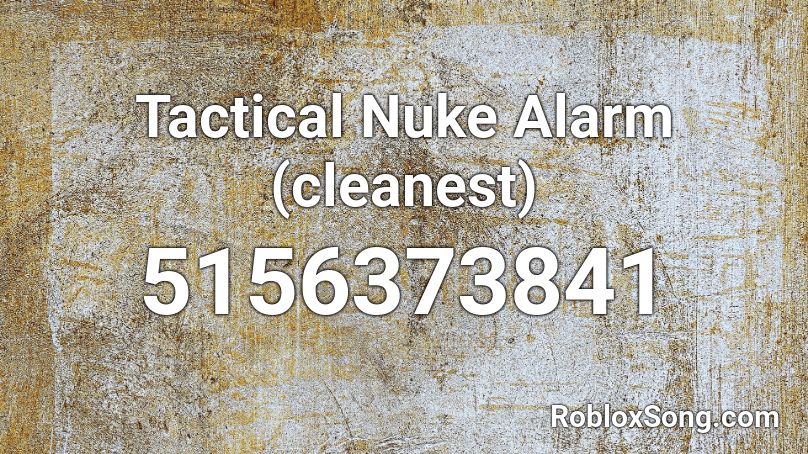
Nuke Alarm Roblox ID Roblox Music Codes 433848566 . Nuclear Alarm Roblox ID Roblox Music Codes 1134993409 . Nuclear Missile Alarm Roblox ID Roblox Music Codes 6466025566 . Nuclear Alarm Roblox ID Roblox Music Codes 1844543510 . Tactical Nuke Alarm Cleanest Roblox ID Roblox Music Codes 5156373841
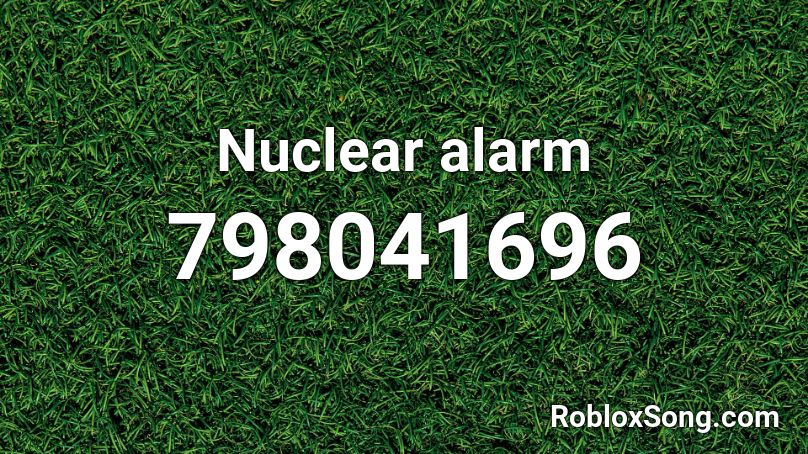
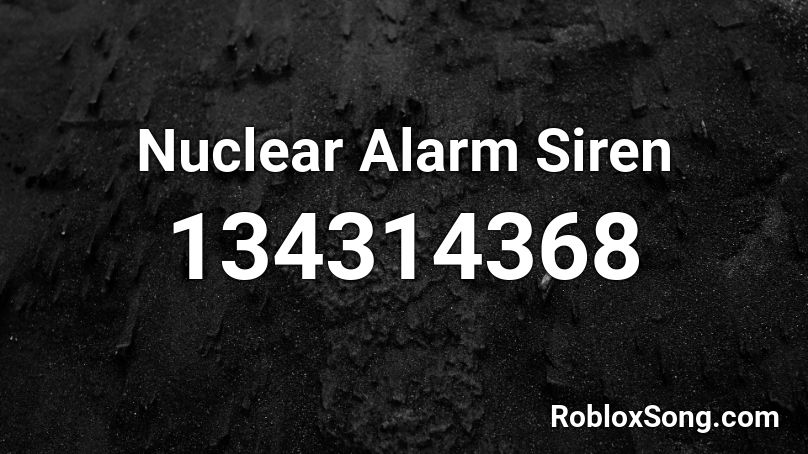

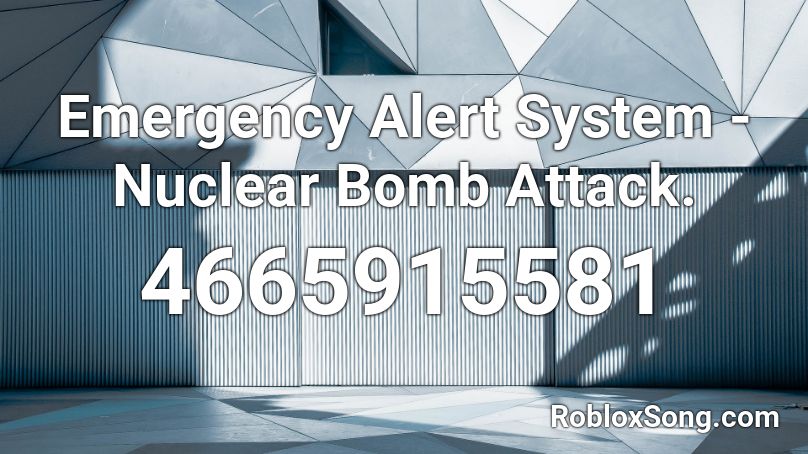
Nuclear Alarm Roblox ID Roblox Music Codes 798041696 . Nuclear Alarm Siren Roblox ID Roblox Music Codes 134314368 . Nuclear Alarm Roblox Id Loud At Colby Westlake Blog . Nuke Roblox Png. Emergency Alert System Nuclear Bomb Attack Roblox ID Roblox Music 4665915581


Nuclear Attack Warning Roblox ID Roblox Id For Nuclear . Nuclear Alarm Roblox Id Loud At Colby Westlake Blog . Nuclear Alarm Pinewood Computer Core Roblox ID Roblox Music Codes 160664485 . Nuke Alert Sound Roblox ID Roblox Music Codes 538062603 . Modern Warfare 2 Tactical Nuke Alarm Countdown Roblox ID Roblox 337599795
Tactical Nuke Alarm Fixed Fixed Roblox ID Roblox Music Codes 3460567468 . Nuclear Alarm 2 Roblox ID Roblox Music Codes 798042613 . Nuclear Alert Roblox ID Roblox Music Codes 2814060231 . Nuclear Alarm HQ Roblox ID Roblox Music Codes 3618473423 . Nuclear Control Room Alarm Roblox ID Roblox Music Codes 4900823361
DEFCON Nuclear Alarm Roblox ID Roblox Music Codes 675587093 . Nuclear Alert Roblox ID Roblox Music Codes 1837306269 . Chernobyl Nuclear Power Plant Alarm Ambiance Roblox ID Roblox Music Codes 5281199322 . Italian Nuke Emergency Alert Roblox ID Roblox Music Codes 3029306562 . Nuke Siren Roblox ID Roblox Music Codes 6525690145


UK Nuclear Attack Alert Roblox ID Roblox Music Codes 5100284678 . Nuke Tycoon Nuclear Codes Updated June 2026 MrGuider Roblox Nuke Tycoon Nuclear Codes . Tactical Nuke Roblox ID Roblox Music Codes 432416928 . Roblox Nuke Your City Codes May 2026 TechWiser Nuke Your City Codes.webp. Air Raid Siren Roblox ID Codes 2026 World War II Song Air Raid Siren Roblox ID Codes 300x170


Alarm Roblox ID Roblox Music Codes 1845080313 . Nuclear Attack Warning Roblox ID Roblox Music Codes 6805502216 . Nuke Tycoon Nuclear Codes June 2026 Pillar Of Gaming Nuke Tycoon Nuclear Codes Roblox. Nuclear Alarm Roblox Id Loud At Colby Westlake Blog . Nuclear Alarm Roblox Id Loud At Colby Westlake Blog