What specific sections should a theatre resume include?
A strong theatre resume in the U.S. typically features contact information, a professional summary or objective, performance or production experience, training and education, and a dedicated special skills section. Actors also include physical attributes and vocal range. Technical roles highlight software proficiency and certifications. Tailoring these sections to the specific job or audition is crucial for success, ensuring relevance and immediate impact on casting directors or hiring managers.
How important is formatting for a theatre resume?
Formatting is incredibly important for a theatre resume, as it dictates readability and immediate professional impression. Opt for a clean, organized layout with clear headings and consistent spacing. For actors, a standard one-page format is common, while technical professionals may use two pages to detail extensive experience. Ensure ample white space and use a professional, legible font. A well-formatted resume quickly conveys attention to detail, a highly valued trait in the performing arts industry.
Do I need different resumes for different types of theatre roles?
Yes, tailoring your theatre resume for different roles—such as dramatic acting, musical theatre, or stage management—is highly recommended. While core information remains, emphasize experiences and skills most relevant to the specific role you are pursuing. For a musical, highlight vocal range and dance; for a technical role, detail specific equipment and software expertise. This targeted approach demonstrates your understanding of the role's demands and maximizes your chances for consideration in the U.S. theatre market.
What special skills are beneficial to list on a theatre resume?
Beneficial special skills for a theatre resume are those that enhance your versatility and unique appeal. For actors, this includes stage combat, dialects, foreign languages, musical instruments, dance styles (ballet, jazz, tap), or even athletic abilities. Technical theatre resumes should list proficiencies in specific software like CAD or QLab, certifications such as OSHA, and hands-on experience with rigging, carpentry, or soundboards. Be precise and honest about your skill level.
Where can I find theatre resume examples for specific roles?
Numerous online resources, theatrical career websites, and professional acting or technical theatre organizations offer valuable theatre resume examples. University theatre departments and drama school career services often provide templates and guidance. Searching for "actor resume template," "stage manager resume example," or "musical theatre resume format" can yield specific results. Additionally, reviewing professional profiles on networking sites like LinkedIn can provide inspiration for structuring your own compelling resume.
theatre resume example, acting resume theatre, musical theatre resume, technical theatre resume, stage management resume, how to build a theatre resume, theatre job application resume, best theatre resume tips, theatre auditions resume format, U.S. theatre career resumeThis comprehensive meta description guides U.S. theatre professionals and aspiring artists in crafting an impactful theatre resume example that truly stands out to casting directors and production teams. Discover essential sections, optimal formatting tips, and crucial content elements designed to showcase your unique talents effectively. Learn precisely how to highlight acting roles, technical skills, production experience, and specialized training in a manner that aligns perfectly with current industry standards. Understand why a meticulously tailored theatre resume is absolutely critical for securing auditions and unlocking new opportunities within the highly competitive theatrical landscape. This guide empowers you to refine your professional presentation, enabling informed decisions on what specific accomplishments to include and how best to present them for maximum impact, whether you are actively seeking local community theatre roles or ambitiously aiming for Broadway stages. Optimize your theatre resume today to capture immediate attention and propel your acting or production career forward with confidence.
- What is the key difference between an acting and technical theatre resume? - An acting resume focuses on performance credits, physical attributes, vocal range, and on-stage skills, often including a headshot. A technical theatre resume highlights production experience, equipment proficiency, software expertise, and backstage responsibilities. Both demand professional formatting but prioritize different aspects of theatrical contribution. Tailoring to the specific role is crucial for either type in the U.S. industry.
- How long should a theatre resume be for a beginner? - For beginners in theatre, a one-page resume is ideal for both acting and technical roles. This length forces conciseness, ensuring only the most relevant training, roles, and skills are presented. As experience grows, actors may remain at one page, while technical professionals might expand to two. Focus on quality over quantity, making every entry count for U.S. casting directors.
- Is it acceptable to use a template for a theatre resume? - Yes, using a professional template can provide an excellent starting point for a theatre resume, ensuring a clean and organized layout. However, always customize the template to reflect your unique experiences and the specific requirements of the theatrical role you seek. Avoid generic templates; instead, adapt one to highlight your performance or technical skills effectively. Personalization is key for standing out.
- What kind of photo should I use for an acting resume? - For an acting resume in the U.S., you must include a professional, current headshot. This photo should be well-lit, clearly show your face, and reflect your current appearance and general casting type. Avoid selfies or casual snapshots. Ensure it is attached or printed neatly on the resume. The headshot is a critical tool for helping casting directors visualize you in a role.
- Should I list non-theatre jobs on my resume? - Generally, prioritize theatre-specific experience on your theatre resume. If you have limited theatre credits, you can include transferable skills from non-theatre jobs, such as project management, teamwork, or customer service, especially if they are relevant to technical roles or company management. Clearly articulate how these skills translate to a theatrical environment. Otherwise, keep the focus on performing arts experience.
- How do I update my theatre resume effectively? - Regularly update your theatre resume by adding new performance credits, significant training, workshops, and any acquired special skills. Remove older, less relevant entries to maintain conciseness. Periodically review your resume with a fresh perspective or seek feedback from industry professionals. Ensuring your resume reflects your most current and impactful achievements is crucial for continued career advancement in the U.S. theatre scene.
A stellar theatre resume example serves as your most compelling introduction in the competitive performing arts world. It is much more than just a list of past experiences; it is a strategic marketing tool designed to showcase your unique talents, training, and professional dedication to casting directors, producers, and hiring managers across the United States. Understanding the precise elements that constitute an effective theatrical resume is the first critical step toward landing those coveted auditions, securing impactful roles, or gaining crucial production positions. This guide delves into constructing a powerful resume, ensuring every detail reflects your commitment and readiness for the stage or behind-the-scenes demands, helping you navigate the unique expectations of the American theatre industry. We will explore various formats, content considerations, and expert tips to ensure your resume opens doors to your next big opportunity.
What Makes a Theatre Resume Example Truly Stand Out?
Creating an outstanding theatre resume example involves a delicate balance of content, clarity, and visual appeal, meticulously tailored for the U.S. performing arts scene. Unlike standard corporate resumes, a theatre resume prioritizes performance credits, specialized training, and unique skills directly applicable to stage work. Strong resumes immediately convey your professional caliber and suitability for specific roles, often needing to capture attention within mere seconds. For instance, an actor's resume might emphasize specific character types, vocal ranges, or physical proficiencies, while a technical theatre resume would highlight specific equipment mastery, production software expertise, or leadership in various crew positions. The goal is to provide a comprehensive yet concise snapshot of your theatrical journey, making a memorable first impression that encourages further consideration. It needs to reflect your readiness and passion for the craft.
Key elements that elevate a theatre resume include a professional headshot or a brief, impactful summary statement, especially for those with extensive experience, or a compelling objective for emerging artists. Beyond just listing credits, detailing specific roles, venues, directors, and the scope of your responsibilities provides critical context. For example, mentioning a challenging role in a regional theatre production or specific technical solutions implemented during a complex show offers tangible evidence of your capabilities. Furthermore, incorporating a dedicated section for special skills such as stage combat, various dialects, musical instruments, or relevant technical proficiencies can significantly differentiate you from other candidates. These unique attributes are often what casting directors or hiring managers actively seek, providing a distinct advantage in a crowded field.
Moreover, ensuring your theatre resume example is consistently updated with your latest achievements and professional development is paramount. Attending workshops, gaining new certifications, or participating in innovative theatrical projects demonstrates continuous growth and a proactive approach to your career. For U.S. job seekers, clarity and accessibility are also crucial; resumes should be easy to read, well-organized, and typically formatted to fit on one page for actors or two pages for production roles. Submitting a resume free of errors and presented with a clean, professional aesthetic signals attention to detail, a highly valued trait in any theatrical endeavor. Always proofread meticulously and consider seeking feedback from industry professionals to polish your presentation before sending it to potential employers or audition panels.
How To Structure Your Theatre Resume for Maximum Impact
Structuring your theatre resume example effectively is a strategic process, guiding the reader through your qualifications with ease and clarity. Begin with your contact information clearly visible at the top, including your name, professional email, and phone number; avoid including a full address for privacy reasons, though your city and state are often helpful for local opportunities. For actors, this section often integrates agency representation details if applicable, along with links to professional websites or online portfolios. Directly below, consider a powerful objective statement or a concise professional summary that quickly communicates your career aspirations or key strengths, immediately signaling your value to the reader. This initial segment sets the stage, so to speak, for the rest of your impressive qualifications.
The core of an acting resume typically features a "Credits" or "Performance Experience" section, organized chronologically in reverse order, highlighting your most recent and impactful roles first. Each entry should include the production title, your role, the theatre company or venue, and the director. For technical theatre professionals, this section might be titled "Production Experience" or "Technical Roles," detailing the show, your specific position (e.g., Lighting Designer, Stage Manager), the theatre, and key responsibilities or achievements. Use strong action verbs to describe your contributions, quantifying results where possible. For instance, instead of "Managed props," consider "Coordinated prop acquisition and maintenance for six mainstage productions, ensuring seamless transitions." This specificity demonstrates tangible skills and contributions.
Following your primary experience, include sections for "Training and Education," listing relevant degrees, conservatories, workshops, and significant instructors. This helps establish your foundational knowledge and ongoing development. The "Special Skills" section is incredibly important in theatre, allowing you to list unique abilities like accents, languages, stage combat, various dance styles, specific musical instruments, or even technical proficiencies like CAD software, sound mixing boards, or theatrical rigging. For technical roles, list software expertise (e.g., Vectorworks, QLab) and certifications (e.g., OSHA, First Aid). Conclude with any "Awards and Honors" or professional affiliations, adding another layer of credibility. Remember, every section should contribute to a compelling narrative of your theatrical readiness.
Are There Different Theatre Resume Examples for Actors vs. Technical Roles?
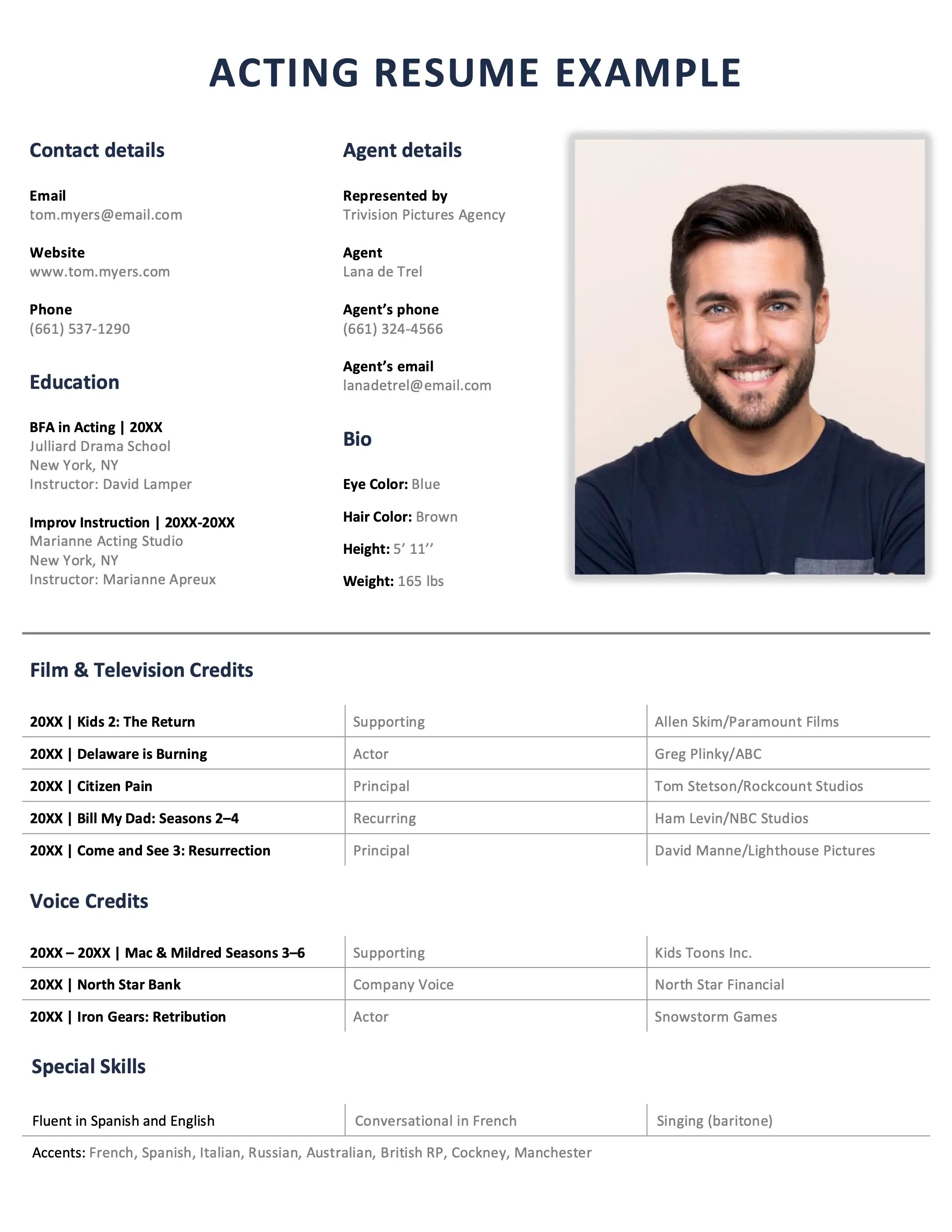
Absolutely, the requirements for a theatre resume example vary significantly between acting and technical roles, reflecting the distinct skill sets and experiences each profession demands. An actor's resume, for instance, typically emphasizes performance credits, vocal range, physical characteristics (height, weight, hair color), and special performance skills such as singing, dancing, or stage combat. It often features a prominent, high-quality headshot and might include a list of dramatic or comedic roles performed, along with specific directors and theatre companies. The primary goal is to demonstrate versatility and suitability for various character types, making it easy for casting directors to envision the actor in a specific role. These resumes are intensely focused on visible, on-stage talent and training directly related to performance.
In contrast, a technical theatre resume example focuses on practical skills, production management, and technical expertise behind the scenes. Professionals in roles like stage management, lighting design, sound engineering, costume design, or set construction need to showcase proficiency with specific equipment, software, and project management capabilities. Their resumes will list productions, their specific technical role, key responsibilities, and often highlight problem-solving skills or innovative solutions they implemented. Instead of a headshot, they might include links to a portfolio of their design work or production photos that demonstrate their contributions. The emphasis shifts from personal performance to measurable contributions to a production's technical execution and overall artistic vision, providing clear evidence of their ability to manage complex theatrical operations.
Both types of resumes, however, share core principles for effectiveness in the U.S. theatre industry. They must be impeccably organized, easy to read, and free of errors. Each resume serves as a professional calling card, tailored to the specific demands of the role being sought. Regardless of whether you are an actor bringing characters to life or a technician bringing stages to life, your resume needs to convey professionalism, relevant experience, and an understanding of the industry's unique demands. Carefully considering the specific needs of the position you are applying for and adjusting your resume accordingly will significantly increase your chances of securing an interview or audition. Precision and relevance are paramount in both acting and technical theatre resume examples.
Frequently Asked Questions About Theatre Resumes
What is the ideal length for a theatre resume example?
For actors in the U.S., a one-page theatre resume is generally preferred, especially for emerging and mid-career professionals. This concise format helps casting directors quickly assess key qualifications. Experienced actors with extensive credits might extend to a second page. Technical theatre resumes, due to the detailed nature of production experience and specialized skills, can often be two pages. Prioritize relevance and impact over simply filling space, ensuring every entry adds value to your professional narrative.
Should I include a headshot on my theatre resume?
Yes, for actors, a professional headshot is a standard and often required component of a theatre resume example in the United States. It should be attached to the resume or printed directly on it, typically at the top. Ensure it's a current, high-quality photo that reflects your professional demeanor and casting type. Technical theatre professionals generally do not include a headshot, focusing instead on a strong portfolio of their work.
How do I list special skills on a theatre resume?
Create a dedicated "Special Skills" section on your theatre resume example. Categorize skills for clarity, such as musical instruments, dialects, languages, stage combat certifications, various dance styles, or athletic abilities. For technical resumes, list specific software proficiencies (e.g., AutoCAD, QLab), equipment operation, rigging experience, or relevant certifications like OSHA safety training. Be specific and honest about your proficiency level for each skill.
Conclusion: Navigating Your Theatre Career with a Strong Resume
Crafting an impactful theatre resume example is an essential step for anyone pursuing a career in the dynamic U.S. performing arts industry. From actors seeking their next role to technical professionals managing complex productions, a well-structured and thoughtfully detailed resume serves as your professional ambassador. It communicates your unique strengths, extensive training, and relevant experiences in a format that resonates with industry decision-makers. By adhering to industry-specific best practices, tailoring your content to the role, and continuously refining your presentation, you significantly enhance your visibility and increase your chances of success.
Remember that your theatre resume is a living document, evolving with your career. Regularly update it with new credits, training, and special skills to ensure it always represents your most current and compelling profile. Seek feedback from mentors or industry peers to gain fresh perspectives and polish your resume to perfection. For those actively searching for opportunities, a strong resume often pairs with a professional cover letter, further articulating your interest in a specific role or company. Invest the time in perfecting this vital tool, and watch as it helps open new doors and propel your theatrical aspirations forward, whether you are seeking local auditions in bustling artistic communities or aiming for national tours and major theatrical productions across America.
To find local theatre opportunities or workshops that can boost your resume, consider searching online for "theatre companies near me" or "acting workshops [your city, state]". Explore local university theatre programs for educational resources and networking events. Always check the specific submission guidelines of any theatre or production company you are applying to, as requirements can vary. A powerful theatre resume is your ticket to the stage, the workshop, or the production office. Begin building yours today and take confident steps toward your dream career in theatre.
how to make a theatre resume, theatre resume format, acting resume example, technical theatre resume guide, musical theatre resume tips, theatre audition resume, best theatre resume examples, U.S. theatre jobs resume


Musical Theatre Resume Examples Templates Guide For 2026 AHR0CHM6LY9JZG4UZW5OYW5JDI5JB20VCHJLZGVMAW5LZC1LEGFTCGXLCY82EHBTVNQWDHNRNMR5B0VDN2VYCZLSRGZSR1G0DGLTRWF5RVPYMXV2L2LTYWDLLNBUZW CV 2026 AHR0CHM6LY9JZG4UZW5OYW5JDI5JB20VCHJLZGVMAW5LZC1LEGFTCGXLCY9FAHRQUMZKZKFWTHFQTMPNS1PRAVLVTXB5S1LTM1JFMHNWVHBRBXHPL2LTYWDLLNBUZW Technical 2026 AHR0CHM6LY9JZG4UZW5OYW5JDI5JB20VCHJLZGVMAW5LZC1LEGFTCGXLCY9XT3E2EDU2BDDQTMJITJJYOHZLZHPPWETUNKFIUTBKZGFWCLPSAEZHL2LTYWDLLNBUZW Best Theater And 2026 Resumebuilder Com Theaterdirector Acting To Win The Job In 2026 Example Free Printable Template 2026 AHR0CHM6LY9JZG4UZW5OYW5JDI5JB20VCHJLZGVMAW5LZC1LEGFTCGXLCY9RZGF0OGRDRWFGOXJ5YLMZCJBTCZRRSULPZULEBMLND3UXNWJOZ1RJL2LTYWDLLNBUZW That Got Jobs 2026 Standout 2026 AHR0CHM6LY9JZG4UZW5OYW5JDI5JB20VCHJLZGVMAW5LZC1LEGFTCGXLCY83YLFJMWQ1MLPHYJBXOTRPDDBHSGFWV0FJUNPQBNHGYU93DM40SUMZL2LTYWDLLNBUZW 2026 Org 987915 Technician 987915 2026 Musicaltheater Customize Resumes Online Canva Antique White KPIMJ9RPUOQ.


Acting Resume Template Examples With Expert Tips Example Custom Musical Theatre CV Guide For 2026 AHR0CHM6LY9JZG4UZW5OYW5JDI5JB20VCHJLZGVMAW5LZC1LEGFTCGXLCY8XAJRVNLJAMTHJVHJERVHSS1ZZUUX5STL4VENVAEJLNVC5OFNTA254L2LTYWDLLNBUZW That Got Jobs In 2026 Elegant Templates 2026 AHR0CHM6LY9JZG4UZW5OYW5JDI5JB20VCHJLZGVMAW5LZC1LEGFTCGXLCY9IQ1JMSLNODDLJMUXSCWFWY2NUNKDAQJVMTLDMRDF0DXHDTTC2BET6L2LTYWDLLNBUZW Technical 2026 LK9DIDYT8OGW48NTKEINBA8OLPAMNYHJLELZK3ZP Work 2026 Professional Theater And Writing To Win The Job 2026 Voice Actor Beginner Proven 2026 2026 Headshots NYC Screen Shot 2023 At Pm Orig 2023 2026 AHR0CHM6LY9JZG4UZW5OYW5JDI5JB20VCHJLZGVMAW5LZC1LEGFTCGXLCY9ETEJ0WUVIOFZRZM15Q09NBJNXV29VUGLXUUFWU0Y5YTBUD0DNZ1QZL2LTYWDLLNBUZW 2026 Standout.


Technical Theatre Resume Examples Guide For 2026 AHR0CHM6LY9JZG4UZW5OYW5JDI5JB20VCHJLZGVMAW5LZC1LEGFTCGXLCY9PMVY5CZHBQ3NLZE5YOFPRVGOXA3IYNDLEZE1HVGJARTVBC2THU1DVL2LTYWDLLNBUZW 2026 AHR0CHM6LY9JZG4UZW5OYW5JDI5JB20VCHJLZGVMAW5LZC1LEGFTCGXLCY81SUHQRGVYEERPWFVTCFRQAJVTC244VLK2ZHM4ZVZUV0RRRM1WQK4YL2LTYWDLLNBUZW 2026 AHR0CHM6LY9JZG4UZW5OYW5JDI5JB20VCHJLZGVMAW5LZC1LEGFTCGXLCY90UEDND1LYTGLRBDBGZWNRV2TSZFD5SWVBZEVLV2XWMMXWUJBMS1RSL2LTYWDLLNBUZW Director Samples Templates 2026 1664784120 Pdf 1664784120 2026 Image Professional Acting That Got Jobs In 2026 Work 2026 Elegant Example To Win The Job 2026 CV Template Writing 2026 Best And 2026 Theatertechnician.